

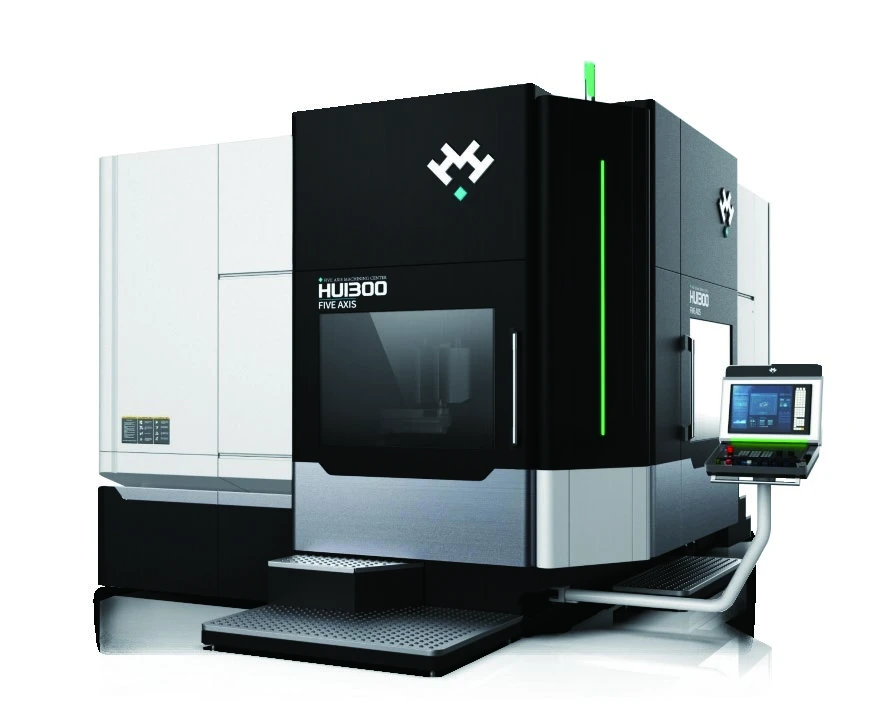
Multi-face holes, angled features and complex contours
Five-axis processing can be reviewed for holes in several directions, related datums and surfaces with difficult tool access. Indexed 3+2 and simultaneous motion have different programming and workholding requirements. Choose by geometry rather than assuming that more axes establish part quality.
Documented equipment and workholding review
The documented five-axis setup includes the Huanghu HU1300 and HIMILE XHQ420. Their X/Y/Z travels are 1300/1300/1100 mm and 500/660/450 mm respectively. Travel describes machine movement; the usable part envelope also depends on fixtures, tool reach, rotary clearance and collision planning.
Inspecting related datums and critical features
Send a revision-controlled model and drawing identifying angled holes, relationships across faces, profiles and surface requirements. CMM and other methods need a measurement plan based on datums and feature access. Agree on first-article reporting and critical-feature records during quotation.
Indexed or simultaneous machining: start with feature access
A housing with ports on several faces may suit indexed 3+2 machining. A changing contour may need simultaneous motion. Share the model, functional datums and related tolerances so the review can compare tool access, rotary clearance and reference transfer. Five axes do not automatically eliminate a second setup: holding surfaces, underside features and release from stock still need a complete route.
Check the equipment evidence against your workpiece
The supplied equipment information identifies a Huanghu HU1300 and a HIMILE XHQ420. Published axis travels describe machine movement, not an unconditional part envelope or finished-part tolerance. The fixture, toolholder, rotary sweep and required inspection access must fit together. Use the factory page and manufacturer literature to review the equipment, then request a drawing-specific assessment.
Agree on what will be inspected
Mark bore positions, mating faces and other functional relationships on a controlled drawing. Specify the datum system, finishing sequence, first-article requirements and records needed for acceptance. CMM, vision or other methods must suit the actual feature. Provide material condition and quantities for both the first order and repeat batches; programming and fixture preparation can affect their costs differently.
Manufacturing evidence you can review
Equipment and material examples refer to the supplied inventory, company profile and manufacturer literature. General guidance and illustrative images are not customer delivery case studies or a substitute for drawing review. Agree on inspection, reporting and delivery scope for each project.
Need to verify a capability or request a correction? Contact the YILIU team.